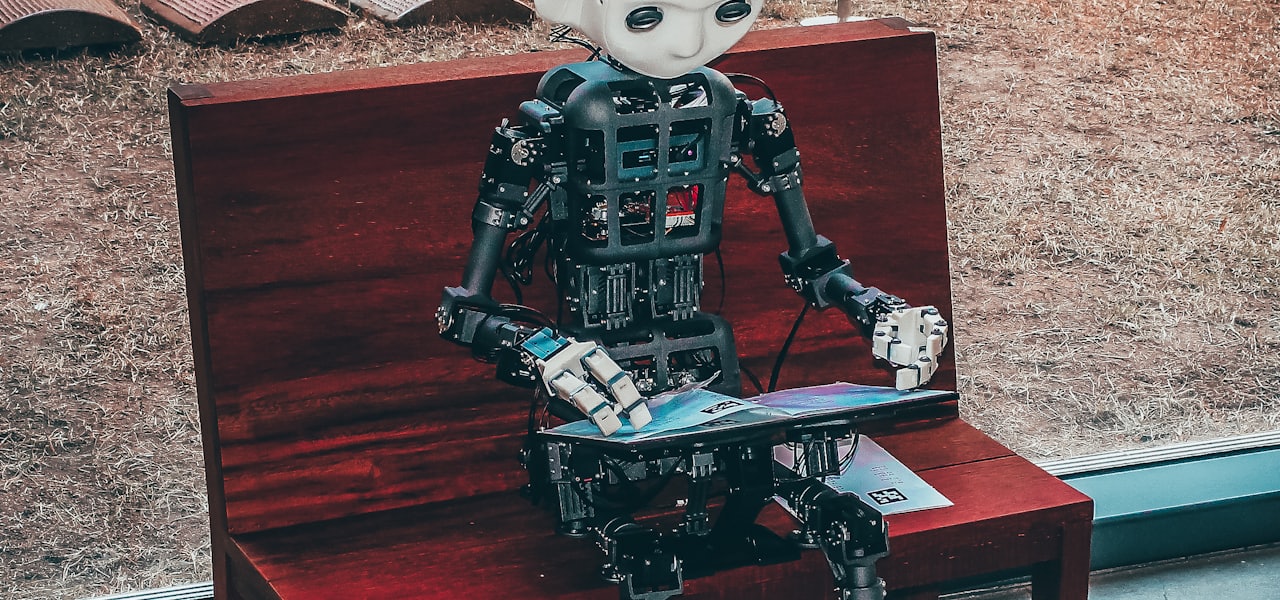
In the field of artificial intelligence (AI), a hallucination or artificial hallucination (also called bullshitting, confabulation, or delusion) is a response generated by AI that contains false or misleading information presented as fact. This term draws a loose analogy with human psychology, where a hallucination typically involves false percepts. For example, a chatbot powered by large language models (LLMs), like ChatGPT, may embed plausible-sounding random falsehoods within its generated content. Detecting and mitigating errors and hallucinations pose significant challenges for practical deployment and reliability of LLMs in high-stakes scenarios, such as chip design, supply chain logistics, and medical diagnostics. Some software engineers and statisticians have criticized the specific term "AI hallucination" for unreasonably anthropomorphizing computers. Symbolic artificial intelligence models generally do not produce hallucinations, unlike large language models. == Term == === Origin === Since the 1980s, the term "hallucination" has been used in computer vision with a positive connotation to describe the process of adding detail to an image. For example, the task of generating high-resolution face images from low-resolution inputs is called face hallucination. The first documented use of the term "hallucination" in this sense is in the PhD thesis of Eric Mjolsness in 1986. A notable work is the face hallucination algorithm by Simon Baker and Takeo Kanade published in 1999. In the 2000s, hallucinations were described in statistical machine translation as a failure mode. Since the 2010s, the term has undergone a semantic shift to signify the generation of factually incorrect or misleading outputs by AI systems in tasks like machine translation and object detection. In 2015, hallucinations were identified in visual semantic role labeling tasks by Saurabh Gupta and Jitendra Malik. In 2015, computer scientist Andrej Karpathy used the term "hallucinated" in a blog post to describe his recurrent neural network (RNN) language model generating an incorrect citation link. In 2017, Google researchers used the term to describe the responses generated by neural machine translation (NMT) models when they are not related to the source text, and in 2018, the term was used in computer vision to describe instances where non-existent objects are erroneously detected because of adversarial attacks. In July 2021, Meta warned during its release of BlenderBot 2 that the system is prone to "hallucinations", which Meta defined as "confident statements that are not true". Following OpenAI's ChatGPT release in beta version in November 2022, some users complained that such chatbots often seem to pointlessly embed plausible-sounding random falsehoods within their generated content. Many news outlets, including The New York Times, started to use the term "hallucinations" to describe these models' frequently incorrect or inconsistent responses. In 2023, the Cambridge dictionary updated its definition of hallucination to include this new sense specific to the field of AI. Some researchers have highlighted a lack of consistency in how the term is used, but also identified several alternative terms in the literature, such as confabulations, fabrications, and factual errors. === Definitions and alternatives === Uses, definitions and characterizations of the term "hallucination" in the context of LLMs include: "a tendency to invent facts in moments of uncertainty" (OpenAI, May 2023) "a model's logical mistakes" (OpenAI, May 2023) "fabricating information entirely, but behaving as if spouting facts" (CNBC, May 2023) "making up information" (The Verge, February 2023) "probability distributions" (in scientific contexts) Journalist Benj Edwards, in Ars Technica, writes that the term "hallucination" is controversial, but that some form of metaphor remains necessary; Edwards suggests "confabulation" as an analogy for processes that involve "creative gap-filling". In July 2024, a White House report on fostering public trust in AI research mentioned hallucinations only in the context of reducing them. Notably, when acknowledging David Baker's Nobel Prize-winning work with AI-generated proteins, the Nobel committee avoided the term entirely, instead referring to "imaginative protein creation". Hicks, Humphries, and Slater, in their article in Ethics and Information Technology, argue that the output of LLMs is "bullshit" under Harry Frankfurt's definition of the term, and that the models are "in an important way indifferent to the truth of their outputs", with true statements only accidentally true, and false ones accidentally false. Some researchers also use the derogatory term "botshit", often referring to uncritical use of AI. === Criticism === In the scientific community, some researchers avoid the term "hallucination", seeing it as potentially misleading. It has been criticized by Usama Fayyad, executive director of the Institute for Experimental Artificial Intelligence at Northeastern University, on the grounds that it misleadingly personifies large language models and is vague. Mary Shaw said, "The current fashion for calling generative AI's errors 'hallucinations' is appalling. It anthropomorphizes the software, and it spins actual errors as somehow being idiosyncratic quirks of the system even when they're objectively incorrect." In Salon, statistician Gary Smith argues that LLMs "do not understand what words mean" and consequently that the term "hallucination" unreasonably anthropomorphizes the machine. Murray Shanahan argues that anthropomorphic framing of LLM capabilities, including terms like "hallucination", encourages users and researchers to attribute cognitive processes to systems that operate through statistical pattern completion, and advocates for more careful linguistic practices when discussing LLM behavior. Kristina Šekrst argues that applying psychological vocabulary to LLM outputs obscures the difference between the appearance of mental properties and their genuine presence. Förster & Skop assert that tech companies use the hallucination metaphor to anthropomorphize models and deflect responsibility for non-factual outputs. Some see the AI outputs not as illusory but as prospective—that is, having some chance of being true, similar to early-stage scientific conjectures. The term has also been criticized for its association with psychedelic drug experiences. == In natural language generation == In natural language generation, there are several reasons why natural language models hallucinate: === Hallucination from data === Hallucinations can stem from incomplete, inaccurate or unrepresentative data sets. === Modeling-related causes === The pre-training of generative pretrained transformers (GPT) involves predicting the next word. It incentivizes GPT models to "give a guess" about what the next word is, even when they lack information. Some researchers take an anthropomorphic perspective and posit that hallucinations arise from a tension between novelty and usefulness. For instance, Amabile and Pratt define human creativity as the production of novel and useful ideas. By extension, a focus on novelty in machine creativity can lead to the production of original but inaccurate responses—that is, falsehoods—whereas a focus on usefulness may result in memorized content lacking originality. By 2022, newspapers such as The New York Times expressed concern that, as the adoption of bots based on large language models continued to grow, unwarranted user confidence in bot output could lead to problems. === Interpretability research === In 2025, interpretability research by Anthropic on the LLM Claude identified internal circuits that cause it to decline to answer questions unless it knows the answer. By default, the circuit is active and the LLM doesn't answer. When the LLM has sufficient information, these circuits are inhibited and the LLM answers the question. Hallucinations were found to occur when this inhibition happens incorrectly, such as when Claude recognizes a name but lacks sufficient information about that person, causing it to generate plausible but untrue responses. === Examples === On 15 November 2022, researchers from Meta AI published Galactica, designed to "store, combine and reason about scientific knowledge". Content generated by Galactica came with the warning: "Outputs may be unreliable! Language Models are prone to hallucinate text." In one case, when asked to draft a paper on creating avatars, Galactica cited a fictitious paper from a real author who works in the relevant area. Meta withdrew Galactica on 17 November due to offensiveness and inaccuracy. OpenAI's ChatGPT, released in beta version to the public on November 30, 2022, was based on the foundation model GPT-3.5 (a revision of GPT-3). Professor Ethan Mollick of Wharton called it an "omniscient, eager-to-please intern who sometimes lies to you". Data scientist Teresa Kuba
Automated Mathematician
The Automated Mathematician (AM) is one of the earliest successful discovery systems. It was created by Douglas Lenat in Lisp, and in 1977 led to Lenat being awarded the IJCAI Computers and Thought Award. AM worked by generating and modifying short Lisp programs which were then interpreted as defining various mathematical concepts; for example, a program that tested equality between the length of two lists was considered to represent the concept of numerical equality, while a program that produced a list whose length was the product of the lengths of two other lists was interpreted as representing the concept of multiplication. The system had elaborate heuristics for choosing which programs to extend and modify, based on the experiences of working mathematicians in solving mathematical problems. == Controversy == Lenat claimed that the system was composed of hundreds of data structures called "concepts", together with hundreds of "heuristic rules" and a simple flow of control: "AM repeatedly selects the top task from the agenda and tries to carry it out. This is the whole control structure!" Yet the heuristic rules were not always represented as separate data structures; some had to be intertwined with the control flow logic. Some rules had preconditions that depended on the history, or otherwise could not be represented in the framework of the explicit rules. What's more, the published versions of the rules often involve vague terms that are not defined further, such as "If two expressions are structurally similar, ..." (Rule 218) or "... replace the value obtained by some other (very similar) value..." (Rule 129). Another source of information is the user, via Rule 2: "If the user has recently referred to X, then boost the priority of any tasks involving X." Thus, it appears quite possible that much of the real discovery work is buried in unexplained procedures. Lenat claimed that the system had rediscovered both Goldbach's conjecture and the fundamental theorem of arithmetic. Later critics accused Lenat of over-interpreting the output of AM. In his paper Why AM and Eurisko appear to work, Lenat conceded that any system that generated enough short Lisp programs would generate ones that could be interpreted by an external observer as representing equally sophisticated mathematical concepts. However, he argued that this property was in itself interesting—and that a promising direction for further research would be to look for other languages in which short random strings were likely to be useful. == Successor == This intuition was the basis of AM's successor Eurisko, which attempted to generalize the search for mathematical concepts to the search for useful heuristics.
Browser sniffing
Browser sniffing (also known as User agent sniffing and browser detection) is a set of techniques used in websites and web applications in order to determine the web browser a visitor is using, and to serve browser-appropriate content to the visitor. It is also used to detect mobile browsers and send them mobile-optimized websites. This practice is sometimes used to circumvent incompatibilities between browsers due to misinterpretation of HTML, Cascading Style Sheets (CSS), or the Document Object Model (DOM). While the World Wide Web Consortium maintains up-to-date central versions of some of the most important Web standards in the form of recommendations, in practice no software developer has designed a browser which adheres exactly to these standards; implementation of other standards and protocols, such as SVG and XMLHttpRequest, varies as well. As a result, different browsers display the same page differently, and so browser sniffing was developed to detect the web browser in order to help ensure consistent display of content. == Sniffer methods == === Client-side sniffing === Web pages can use programming languages such as JavaScript which are interpreted by the user agent, with results sent to the web server. For example: This code is run by the client computer, and the results are used by other code to make necessary adjustments on client-side. In this example, the client computer is asked to determine whether the browser can use a feature called ActiveX. Since this feature was proprietary to Microsoft, a positive result will indicate that the client may be running Microsoft's Internet Explorer. This is no longer a reliable indicator since Microsoft's open-source release of the ActiveX code, however, meaning that it can be used by any browser. === Standard Browser detection method === The web server communicates with the client using a communication protocol known as HTTP, or Hypertext Transfer Protocol, which specifies that the client send the server information about the browser being used to view the website in a User-Agent header. === Server-side sniffing === Extensive browser techniques enable persistent user tracking even if users try to stay anonymous. See device fingerprint for more details on browser fingerprinting. == Issues and standards == Many websites use browser sniffing to determine whether a visitor's browser is unable to use certain features (such as JavaScript, DHTML, ActiveX, or cascading style sheets), and display an error page if a certain browser is not used. However, it is virtually impossible to account for the tremendous variety of browsers available to users. Generally, a web designer using browser sniffing to determine what kind of page to present will test for the three or four most popular browsers, and provide content tailored to each of these. If a user is employing a user agent not tested for, there is no guarantee that a usable page will be served; thus, the user may be forced either to change browsers or to avoid the page. The World Wide Web Consortium, which sets standards for the construction of web pages, recommends that web sites be designed in accordance with its standards, and be arranged to "fail gracefully" when presented to a browser which cannot deal with a particular standard. Browser sniffing increases maintenance needed. Websites treating some browsers differently should provide an alternative version for other browsers. Use of user agent strings are error-prone because the developer must check for the appropriate part, such as "Gecko" instead of "Firefox". They must also ensure that future versions are supported. Furthermore, some browsers allow changing the user agent string, making the technique useless.
Open Media Framework Interchange
Open Media Format (OMF), Open Media Framework, or Open Media Framework Interchange (OMFI), is a platform-independent file format intended for transfer of digital media between different software applications. OMFI is a file format that aids in exchange of digital media across applications and platforms. This framework enables users to import media elements and to edit information and effects summaries. Sequential media representation is the primary concern that is addressed by this format. The primary objective of OMFI is video production. However, there are a number of additional features which can be listed as follows: The origin of the data can be easily backtracked or identified since the import material is in the form of a videotape or film. There are predefined effects and transitions, which paves the way for easy and quick overlapping and sequencing of various track. The format supports motion control. (i.e. enabling a particular segment to play at a ratio of the speed of another segment) Some of the key benefits of OMFI are: It saves time by getting rid of tape-based file transfers. It brings in flexibility owing to its ability to use a number of applications on multiple workstations. The format preserves the best sound and picture quality during all imports. It eliminates the risk of file formatting and incompatibilities, which in turn allows users to spend their productive time on the creative aspects of their work. It preserves the formatting information during file transfers between applications or workstations. Hence, the need for rebuilding the effects and sequences is eliminated. The OMFI format consists of four primary sections namely Header, Object data, Object dictionary and Track data. The header contains an index of all the segments that constitute the file.
Radio code
A radio code is any code that is commonly used over a telecommunication system such as Morse code, brevity codes and procedure words. == Brevity code == Brevity codes are designed to convey complex information with a few words or codes. Specific brevity codes include: ACP-131 Aeronautical Code signals ARRL Numbered Radiogram Multiservice tactical brevity code Ten-code Phillips Code NOTAM Code === Operating signals === Brevity codes that are specifically designed for use between communications operators and to support communication operations are referred to as "operating signals". These include: Prosigns for Morse code 92 Code, Western Union telegraph brevity codes Q code, initially developed for commercial radiotelegraph communication, later adopted by other radio services, especially amateur radio. Used since circa 1909. QN Signals, published by the ARRL and used by Amateur radio operators to assist in the transmission of ARRL Radiograms in the National Traffic System. R and S brevity codes, published by the British Post Office in 1908 for coastal wireless stations and ships, superseded in 1912 by Q codes X code, used by European military services as a wireless telegraphy code in the 1930s and 1940s Z code, also used in the early days of radiotelegraph communication. == Other == Morse code is commonly used in amateur radio. Morse code abbreviations are a type of brevity code. Procedure words used in radiotelephony procedure, are a type of radio code. Spelling alphabets, including the ICAO spelling alphabet, are commonly used in communication over radios and telephones. == Other meanings == Many car audio systems (car radios) have a so-called 'radio code' number which needs to be entered after a power disconnection. This was introduced as a measure to deter theft of these devices. If the code is entered correctly, the radio is activated for use. Entering the code incorrectly several times in a row will cause a temporary or permanent lockout. Some car radios have another check which operates in conjunction with car electronics. If the VIN or another vehicle ID matches the previously stored one, the radio is activated. If the radio cannot verify the vehicle, it is considered to be moved into another vehicle. The radio will then request for the code number or simply refuse to operate and display an error message such as "CANCHECK" or "SECURE".
Feature hashing
In machine learning, feature hashing, also known as the hashing trick (by analogy to the kernel trick), is a fast and space-efficient way of vectorizing features, i.e. turning arbitrary features into indices in a vector or matrix. It works by applying a hash function to the features and using their hash values as indices directly (after a modulo operation), rather than looking the indices up in an associative array. In addition to its use for encoding non-numeric values, feature hashing can also be used for dimensionality reduction. This trick is often attributed to Weinberger et al. (2009), but there exists a much earlier description of this method published by John Moody in 1989. == Motivation == === Motivating example === In a typical document classification task, the input to the machine learning algorithm (both during learning and classification) is free text. From this, a bag of words (BOW) representation is constructed: the individual tokens are extracted and counted, and each distinct token in the training set defines a feature (independent variable) of each of the documents in both the training and test sets. Machine learning algorithms, however, are typically defined in terms of numerical vectors. Therefore, the bags of words for a set of documents is regarded as a term-document matrix where each row is a single document, and each column is a single feature/word; the entry i, j in such a matrix captures the frequency (or weight) of the j'th term of the vocabulary in document i. (An alternative convention swaps the rows and columns of the matrix, but this difference is immaterial.) Typically, these vectors are extremely sparse—according to Zipf's law. The common approach is to construct, at learning time or prior to that, a dictionary representation of the vocabulary of the training set, and use that to map words to indices. Hash tables and tries are common candidates for dictionary implementation. E.g., the three documents John likes to watch movies. Mary likes movies too. John also likes football. can be converted, using the dictionary to the term-document matrix ( John likes to watch movies Mary too also football 1 1 1 1 1 0 0 0 0 0 1 0 0 1 1 1 0 0 1 1 0 0 0 0 0 1 1 ) {\displaystyle {\begin{pmatrix}{\textrm {John}}&{\textrm {likes}}&{\textrm {to}}&{\textrm {watch}}&{\textrm {movies}}&{\textrm {Mary}}&{\textrm {too}}&{\textrm {also}}&{\textrm {football}}\\1&1&1&1&1&0&0&0&0\\0&1&0&0&1&1&1&0&0\\1&1&0&0&0&0&0&1&1\end{pmatrix}}} (Punctuation was removed, as is usual in document classification and clustering.) The problem with this process is that such dictionaries take up a large amount of storage space and grow in size as the training set grows. On the contrary, if the vocabulary is kept fixed and not increased with a growing training set, an adversary may try to invent new words or misspellings that are not in the stored vocabulary so as to circumvent a machine learned filter. To address this challenge, Yahoo! Research attempted to use feature hashing for their spam filters. Note that the hashing trick isn't limited to text classification and similar tasks at the document level, but can be applied to any problem that involves large (perhaps unbounded) numbers of features. === Mathematical motivation === Mathematically, a token is an element t {\displaystyle t} in a finite (or countably infinite) set T {\displaystyle T} . Suppose we only need to process a finite corpus, then we can put all tokens appearing in the corpus into T {\displaystyle T} , meaning that T {\displaystyle T} is finite. However, suppose we want to process all possible words made of the English letters, then T {\displaystyle T} is countably infinite. Most neural networks can only operate on real vector inputs, so we must construct a "dictionary" function ϕ : T → R n {\displaystyle \phi :T\to \mathbb {R} ^{n}} . When T {\displaystyle T} is finite, of size | T | = m ≤ n {\displaystyle |T|=m\leq n} , then we can use one-hot encoding to map it into R n {\displaystyle \mathbb {R} ^{n}} . First, arbitrarily enumerate T = { t 1 , t 2 , . . , t m } {\displaystyle T=\{t_{1},t_{2},..,t_{m}\}} , then define ϕ ( t i ) = e i {\displaystyle \phi (t_{i})=e_{i}} . In other words, we assign a unique index i {\displaystyle i} to each token, then map the token with index i {\displaystyle i} to the unit basis vector e i {\displaystyle e_{i}} . One-hot encoding is easy to interpret, but it requires one to maintain the arbitrary enumeration of T {\displaystyle T} . Given a token t ∈ T {\displaystyle t\in T} , to compute ϕ ( t ) {\displaystyle \phi (t)} , we must find out the index i {\displaystyle i} of the token t {\displaystyle t} . Thus, to implement ϕ {\displaystyle \phi } efficiently, we need a fast-to-compute bijection h : T → { 1 , . . . , m } {\displaystyle h:T\to \{1,...,m\}} , then we have ϕ ( t ) = e h ( t ) {\displaystyle \phi (t)=e_{h(t)}} . In fact, we can relax the requirement slightly: It suffices to have a fast-to-compute injection h : T → { 1 , . . . , n } {\displaystyle h:T\to \{1,...,n\}} , then use ϕ ( t ) = e h ( t ) {\displaystyle \phi (t)=e_{h(t)}} . In practice, there is no simple way to construct an efficient injection h : T → { 1 , . . . , n } {\displaystyle h:T\to \{1,...,n\}} . However, we do not need a strict injection, but only an approximate injection. That is, when t ≠ t ′ {\displaystyle t\neq t'} , we should probably have h ( t ) ≠ h ( t ′ ) {\displaystyle h(t)\neq h(t')} , so that probably ϕ ( t ) ≠ ϕ ( t ′ ) {\displaystyle \phi (t)\neq \phi (t')} . At this point, we have just specified that h {\displaystyle h} should be a hashing function. Thus we reach the idea of feature hashing. == Algorithms == === Feature hashing (Weinberger et al. 2009) === The basic feature hashing algorithm presented in (Weinberger et al. 2009) is defined as follows. First, one specifies two hash functions: the kernel hash h : T → { 1 , 2 , . . . , n } {\displaystyle h:T\to \{1,2,...,n\}} , and the sign hash ζ : T → { − 1 , + 1 } {\displaystyle \zeta :T\to \{-1,+1\}} . Next, one defines the feature hashing function: ϕ : T → R n , ϕ ( t ) = ζ ( t ) e h ( t ) {\displaystyle \phi :T\to \mathbb {R} ^{n},\quad \phi (t)=\zeta (t)e_{h(t)}} Finally, extend this feature hashing function to strings of tokens by ϕ : T ∗ → R n , ϕ ( t 1 , . . . , t k ) = ∑ j = 1 k ϕ ( t j ) {\displaystyle \phi :T^{}\to \mathbb {R} ^{n},\quad \phi (t_{1},...,t_{k})=\sum _{j=1}^{k}\phi (t_{j})} where T ∗ {\displaystyle T^{}} is the set of all finite strings consisting of tokens in T {\displaystyle T} . Equivalently, ϕ ( t 1 , . . . , t k ) = ∑ j = 1 k ζ ( t j ) e h ( t j ) = ∑ i = 1 n ( ∑ j : h ( t j ) = i ζ ( t j ) ) e i {\displaystyle \phi (t_{1},...,t_{k})=\sum _{j=1}^{k}\zeta (t_{j})e_{h(t_{j})}=\sum _{i=1}^{n}\left(\sum _{j:h(t_{j})=i}\zeta (t_{j})\right)e_{i}} ==== Geometric properties ==== We want to say something about the geometric property of ϕ {\displaystyle \phi } , but T {\displaystyle T} , by itself, is just a set of tokens, we cannot impose a geometric structure on it except the discrete topology, which is generated by the discrete metric. To make it nicer, we lift it to T → R T {\displaystyle T\to \mathbb {R} ^{T}} , and lift ϕ {\displaystyle \phi } from ϕ : T → R n {\displaystyle \phi :T\to \mathbb {R} ^{n}} to ϕ : R T → R n {\displaystyle \phi :\mathbb {R} ^{T}\to \mathbb {R} ^{n}} by linear extension: ϕ ( ( x t ) t ∈ T ) = ∑ t ∈ T x t ζ ( t ) e h ( t ) = ∑ i = 1 n ( ∑ t : h ( t ) = i x t ζ ( t ) ) e i {\displaystyle \phi ((x_{t})_{t\in T})=\sum _{t\in T}x_{t}\zeta (t)e_{h(t)}=\sum _{i=1}^{n}\left(\sum _{t:h(t)=i}x_{t}\zeta (t)\right)e_{i}} There is an infinite sum there, which must be handled at once. There are essentially only two ways to handle infinities. One may impose a metric, then take its completion, to allow well-behaved infinite sums, or one may demand that nothing is actually infinite, only potentially so. Here, we go for the potential-infinity way, by restricting R T {\displaystyle \mathbb {R} ^{T}} to contain only vectors with finite support: ∀ ( x t ) t ∈ T ∈ R T {\displaystyle \forall (x_{t})_{t\in T}\in \mathbb {R} ^{T}} , only finitely many entries of ( x t ) t ∈ T {\displaystyle (x_{t})_{t\in T}} are nonzero. Define an inner product on R T {\displaystyle \mathbb {R} ^{T}} in the obvious way: ⟨ e t , e t ′ ⟩ = { 1 , if t = t ′ , 0 , else. ⟨ x , x ′ ⟩ = ∑ t , t ′ ∈ T x t x t ′ ⟨ e t , e t ′ ⟩ {\displaystyle \langle e_{t},e_{t'}\rangle ={\begin{cases}1,{\text{ if }}t=t',\\0,{\text{ else.}}\end{cases}}\quad \langle x,x'\rangle =\sum _{t,t'\in T}x_{t}x_{t'}\langle e_{t},e_{t'}\rangle } As a side note, if T {\displaystyle T} is infinite, then the inner product space R T {\displaystyle \mathbb {R} ^{T}} is not complete. Taking its completion would get us to a Hilbert space, which allows well-behaved infinite sums. Now we have an inner product space, with enough structure to describe the geometry of the feature hashing function ϕ : R T → R n {\displaystyle \phi :\ma
Ajax (programming)
The Asynchronous JavaScript and XML, usually referred to as Ajax (or AJAX, ) is a set of web development techniques that uses various web technologies on the client-side to create asynchronous web applications. With Ajax, web applications can send and retrieve data from a server asynchronously (in the background) without interfering with the display and behaviour of the existing page. By decoupling the data interchange layer from the presentation layer, Ajax allows web pages and, by extension, web applications, to change content dynamically without the need to reload the entire page. In practice, modern implementations commonly utilize JSON instead of XML. Ajax is not a technology, but rather a programming pattern. HTML and CSS can be used in combination to mark up and style information. The webpage can be modified by JavaScript to dynamically display (and allow the user to interact with) the new information. The built-in XMLHttpRequest object is used to execute Ajax on webpages, allowing websites to load content onto the screen without refreshing the page. == History == In the early-to-mid 1990s, most Websites were based on complete HTML pages. Each user action required a complete new page to be loaded from the server. This process was inefficient, as reflected by the user experience: all page content disappeared, then the new page appeared. Each time the browser reloaded a page because of a partial change, all the content had to be re-sent, even though only some of the information had changed. This placed additional load on the server and made bandwidth a limiting factor in performance. The foundations of AJAX originate back in 1996 with the introduction of JavaScript 1. Developers quickly discovered that any HTML element which accepted a "src" attribute could be used to fetch remote data. By changing the src of a hidden frame, a developer could fetch remote data, process or display it without a page refresh. The remote data could be a string, JavaScript code, XML or a partial HTML page generated on the server. The same could be done with and